
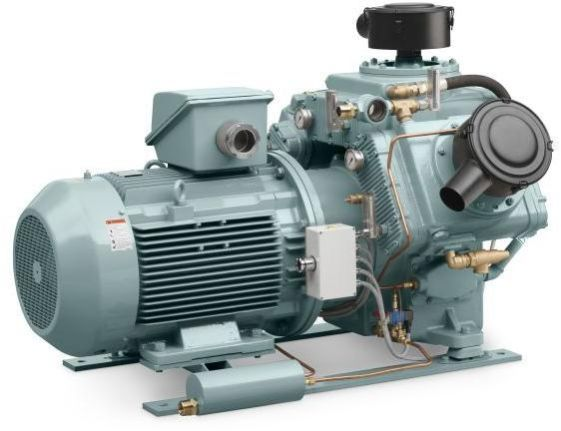
Marine intermediate air-compressors are essential to ship operations. The compressed air produced by these devices powers vital systems all across the ship. Marine engineers can choose the best equipment providers and maintain appropriate operations by having a thorough understanding of how they operate.
Marine Intermediate Air Compressors
Marine intermediate air compressors are specialist devices made for use in nautical settings. There are various ways in which these compressors are not like typical industrial ones. They must endure corrosive saline air, temperature swings, and continuous vibration. The sealing mechanisms and building materials are especially selected to withstand severe marine conditions. Furthermore, these units frequently have improved safety features and emergency shutdown capabilities that are mandated by marine rules.
They function in the space between high-pressure main engine starting air systems and low-pressure service air systems. They are adaptable for a range of marine applications thanks to their moderate pressure level and affordable energy usage.
Functions of Marine Intermediate Air Compressors
In order to work, ambient air must be drawn in and mechanically compressed. While some larger boats use rotary screw designs, the majority of maritime intermediate air compressors use reciprocating piston technology.
To produce compression cycles, pistons travel inside cylinders in reciprocating compressors. Depending on the desired pressure ratio, several phases may be used. Two-stage compression involves cooling after the initial compression, then performing additional compression in a second cylinder. In addition to increasing efficiency, this method lowers the final compressed air output’s temperature.
Essential Elements and Systems
The compressor block retains the major compression parts which involve the crankshaft, connecting rods, the cylinders, and the pistons. Cast iron and other alloys are examples of marine grade materials, tough and corrosion-resistant. Precision machining is critical in a wide range of sea conditions to ensure clearance and operate smoothly.
Cooling systems avoid continuous operation. Intercoolers make the process more efficient by reducing the air temperature between compression steps and preventing thermal damage. Aftercoolers eliminate the moisture, which may cause corrosion in downstream systems, by further reducing the temperature of compressed air before its admission in storage tanks.
Oil lubrication systems do not contaminate the compressed air; however, the right lubrication of the moving parts is maintained. Oil separators eliminate lubricant in the air stream to ensure that the ship’s systems receive clean compressed air. The regular oil examination monitors the state of the compressor and prevents costly malfunctions.
Control systems automatically control the compressor operation. Some of the safety equipment that protects against dangerous working conditions includes temperature sensors, vibration sensors, and pressure relief valves. Modern systems are often characterised by digital controls that have remote monitoring properties.
Considerations for Upkeep and Dependability
When marine intermediate air-compressors are maintained regularly, they will operate reliably. The daily inspections should include monitoring operating pressures, temperatures, amounts of oil, as well as any unusual sounds or vibrations. Air filter condition, presence of cooling water, and drain valve operation are checked every week.
The times of operation and hours influence the expected maintenance time. Years of overhaul may include complete disassembly, inspection of parts, and replacement of parts that are worn.
Filters, gaskets, valves, belts, and other frequently replaced parts should be included in the spare parts inventory. In the event of repairs required a long distance away, essential spares on board minimise downtime. Maintenance logs ease the tracking of components life and predicting when a replacement will be needed.
Uses in Oceanic Operations
Many shipboard operations are powered by compressed air from these systems. Engine starting systems rotate the primary propulsion engines during startup using high-volume air bursts. For maintenance and repair work, constant air pressure is necessary for the pneumatic tools used throughout the vessel.
Navigational equipment, ballast operations, and freight handling control systems frequently use pneumatic actuation. Air horns, emergency systems, and whistle signals are also powered by compressed air. Some vessels rely on compressed air to inert or to purge cargo tanks.
These compressors play a significant role in the operations of the ships due to the flexibility of the intermediate-pressure air. Pneumatic equipment, as opposed to electric systems, keeps running when the power goes off, giving safety systems vital backup capability.
Dubai Air Compressor Supplier Market
One of the major Middle Eastern suppliers of marine equipment is Dubai. The city is the perfect headquarters for air compressor suppliers catering to the maritime sector because of its advantageous location and advanced infrastructure. Marine compressed air systems are the focus of many businesses in Dubai that provide sales, maintenance, and support. When it comes to equipment purchases and repairs, suppliers based in these zones can frequently offer cheap pricing and streamlined customs procedures.
Choosing Reputable Providers for Air Compressors
There are several things to take into account while selecting an air compressor supplier in Dubai. The most crucial requirement is technical proficiency. Providers ought to exhibit in-depth familiarity with maritime applications and legal specifications. Professional competency is demonstrated by qualified technicians and adequate testing facilities.
Vessel reliability and long-term operational expenses are impacted by parts availability. When repairs are necessary, suppliers who have extensive spare parts inventories minimize downtime. Better technical support and part prices are frequently offered by established ties with manufacturers.
Both regular maintenance and urgent repair services are included in the service capabilities. When ships have pressing compressor issues while in port, availability around the clock becomes essential. Repairs can be completed shipside thanks to mobile service capabilities, which lowers expenses and delays in schedule.
Conclusion
As technology develops, marine intermediate air-compressors also continue to change. Enhancements in energy efficiency lower operating expenses while adhering to environmental standards. Compressors can modify their output in response to demand thanks to variable speed drives, which lower energy usage when demand is low.
Cleaner, more effective designs are developed in response to environmental requirements. Established Dubai air compressor supplier provides ship operators with access to the newest machinery and support services.
Real-time performance data and predictive maintenance capabilities are offered by digital monitoring systems. Specialists on shore can assess compressor performance and suggest maintenance measures before issues arise, thanks to remote monitoring.