
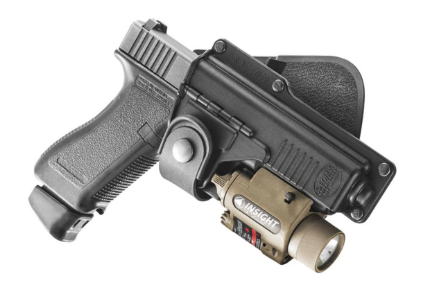
When it comes to firearm carrying solutions, holsters are among the most important accessories for gun owners. They determine not only how securely a firearm is carried, but also how quickly it can be accessed when needed. A retention holster is specifically designed with mechanisms to keep a firearm locked in place, reducing the risk of unauthorized access or accidental loss. By contrast, a standard holster focuses more on accessibility and comfort rather than advanced locking systems. Understanding the key differences between these two holster styles helps firearm owners make informed decisions based on their needs, level of training, and intended use.
What Is a Holster and Why Does It Matter?
Holsters are protective carriers engineered to hold firearms in place. They allow gun owners to balance safety, security, and convenience. Although holsters come in various materials and styles—such as leather, Kydex, or nylon—the defining factor lies in their level of retention. This directly affects how securely the firearm remains holstered and how quickly it can be drawn.
The Importance of Retention Levels
Retention essentially means how well a holster prevents a firearm from falling out or being grabbed by someone else. While most holsters provide at least some form of passive retention through design and fit, specialized versions incorporate active locking systems that require deliberate actions to release the gun for use. This is where the distinction between retention and standard holsters becomes clear.
Defining the Retention Holster
A retention holster incorporates built-in mechanisms that go beyond friction or a tight fit. These holsters require the user to disengage a lock, lever, or strap before drawing the firearm. This makes them particularly valuable in tactical, law enforcement, or security settings where firearm retention is critical.
Levels of Retention
Retention holsters are often classified into levels:
- Level I Retention: Offers a single retention method, such as a strap snap or molded grip hold.
- Level II Retention: Combines passive fit with an active mechanism, like a thumb release or hood guard.
- Level III Retention and Beyond: Multiple layers of security, often involving both thumb and finger-release systems, designed primarily for police or military duties.
The higher the retention level, the more secure the firearm remains, but this also requires additional training to draw the weapon efficiently.
Exploring the Standard Holster
Unlike retention designs, standard holsters focus primarily on ease of use and quick draw capabilities. These holsters often rely on passive retention, achieved through precise molding to the firearm’s shape or the tightness of the holster material.
Benefits of a Standard Holster
- Accessibility: Quicker access makes them ideal for everyday carry.
- Comfort: Minimal locking systems provide a smooth, natural draw.
- Affordability: Standard holsters are typically less expensive and simpler in design.
However, the lack of active locks means there is a greater risk of accidental dislodging or unauthorized access, making them less suitable for high-contact environments.
Choosing the Right Holster
Selecting between a retention and a standard holster depends on intended use. Law enforcement officers, security professionals, or anyone concerned about retention during physical activity may find added peace of mind in a retention-style design. Civilian gun owners carrying for personal defense in low-contact environments often prefer the simplicity of standard holsters.
Factors to Consider When Deciding
- Environment: High-risk or crowded environments may favor retention holsters.
- Frequency of Carry: Regular everyday carriers may prioritize comfort and accessibility.
- Training Level: Retention holsters demand practice, while standard options are beginner-friendly.
- Firearm Type: Some holsters are specifically molded for particular gun models, ensuring proper fit.
Conclusion
The debate between retention and standard holsters boils down to a tradeoff between security and speed. A retention holster ensures maximal protection against accidental loss or unauthorized access, making it a favorite among tactical professionals. Meanwhile, a standard holster offers smooth, quick accessibility that appeals to everyday carriers focused on convenience. Both have their unique strengths, and the right choice depends on personal needs, environment, and level of training. For firearm owners seeking to strike a balance between tailored fit and functional design, exploring specialized options like 1911 holsters can provide both security and accessibility, ensuring a perfect complement to one’s carry preferences.