
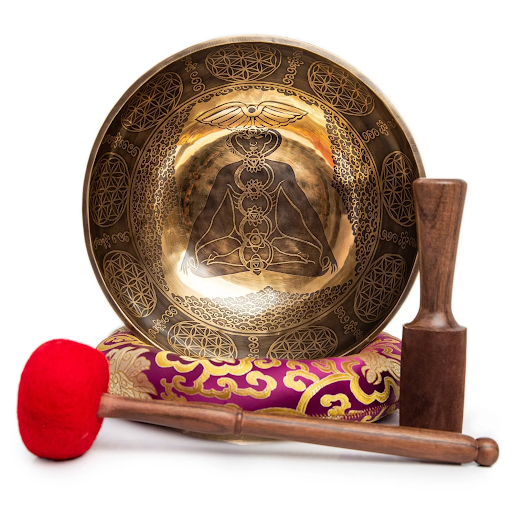
A singing bowl is, in the end, an instrument you buy for its sound. So there’s something a little counterintuitive about shopping for one through a screen, scrolling past product photos with the audio muted, trying to guess what a bowl will actually sound like once the mallet touches its rim. If you’ve ever hovered over the “add to cart” button wondering whether that gorgeous photo hides a dull, tinny tone, you’re not alone. Learning how to choose a Tibetan singing bowl online comes down to reading a handful of visual and descriptive clues that experienced buyers rely on long before they ever hear a bowl in person.
Why Sound Is Hard to Judge From a Photo
Every singing bowl produces its tone through a combination of metal composition, wall thickness, shape, and size. Traditional bowls are often made from a blend of metals, and the exact ratio, along with how evenly the bowl was hammered, influences whether the sound comes out warm and grounding or bright and piercing.
None of that is visible in a still image, which is exactly why online shoppers need a different strategy than simply picking the prettiest listing. The good news is that sound isn’t entirely a mystery once you know what to look for. Several physical and descriptive details reliably correlate with how a bowl will actually perform.
Size Tells You More Than You’d Think
Size is the single most reliable predictor of pitch, and it’s something every listing states clearly. Larger bowls, generally above seven inches in diameter, tend to produce deeper, longer-sustaining tones that feel grounding and slow to fade. Smaller bowls, often used for focused meditation or as a clear signal to open and close a session, produce higher, brighter tones that cut through more quickly.
If you already know the kind of experience you’re after, whether that’s a low, room-filling hum for group sound baths or a crisp, attention-getting chime for personal practice, size narrows the field considerably before you even consider anything else.
What Photos Can Reveal About Craftsmanship
Zoom in on the product photos, particularly close-ups of the rim and interior walls. Genuine hand-hammered bowls show visible, slightly irregular hammer marks rather than a perfectly smooth, machine-uniform surface. This irregularity isn’t a flaw; it’s often what gives traditional bowls their layered, complex overtones rather than a single flat pitch. A bowl that looks too polished and symmetrical may have been mass-produced, which tends to correlate with simpler, less resonant sound.
Weight matters too, even though you can’t feel it through a screen. Listings that specify weight alongside dimensions are worth paying attention to, since a bowl that feels unusually light for its size often has thinner walls and a shorter, weaker sustain.
Reading Descriptions Like a Buyer, Not Just a Browser
Good listings do more than state dimensions. Look for language that describes the tone directly, terms like “deep and resonant,” “bright and clear,” or “multi-layered overtones.” Sellers who genuinely understand their inventory tend to describe sound in specific, sensory terms rather than relying only on generic phrases like “beautiful” or “high quality,” which say very little about the actual experience of playing the bowl.
It’s also worth checking whether the listing mentions the metal composition or traditional origin. Bowls described as hand-forged using a multi-metal alloy, often linked to age-old Himalayan techniques, tend to carry richer harmonics than simpler cast alternatives. This detail alone can tell you a great deal about what to expect once the mallet meets the rim.
The Role of Audio Samples and Video
This is where online shopping has genuinely caught up to in-person browsing. Many retailers now include short audio clips or video demonstrations alongside their listings, letting you hear the actual bowl before buying. If a listing includes this option, use it. Play the clip with headphones if possible, since laptop speakers tend to flatten the subtler overtones that make a bowl feel alive rather than one-dimensional.
The absence of an audio sample isn’t automatically a red flag, but its presence is a meaningful point in a seller’s favor. It signals a level of transparency that suggests confidence in the product’s actual sound, not just its appearance.
Finding the Best Place to Buy Tibetan Singing Bowls Online
Once you know what to look for, the next question becomes where to look. The best place to buy Tibetan singing bowls online tends to share a few traits: detailed, honest descriptions, close-up photography that shows genuine hammer marks and craftsmanship, audio or video samples wherever possible, and a return policy that lets you send the bowl back if the tone simply doesn’t resonate with you once it arrives. A retailer confident in its bowls’ sound quality generally has no hesitation offering that kind of flexibility.
Trusting Your Ears Once It Arrives
Even with careful research, the final judgment happens the moment the bowl is in your hands. Strike it gently, let the tone build, and pay attention to how long the vibration sustains and whether the sound feels layered or flat. If it doesn’t feel right, a reasonable return window means the online purchase doesn’t have to be a permanent gamble.
Conclusion
Buying a singing bowl online without hearing it first isn’t as risky as it sounds, provided you know which details actually matter. Size, visible craftsmanship, descriptive listings, and audio samples together give a surprisingly accurate preview of tone before the bowl ever arrives. For those buying in larger volumes, such as yoga studios or wellness centers, working with an established prayer flags wholesale supplier that also carries singing bowls can simplify sourcing multiple items from one trusted source. With the right approach, an online purchase can feel just as considered as browsing bowls in person.
Himalayan Bazaar offers authentic, hand-hammered Tibetan singing bowls crafted by skilled Nepalese artisans using centuries-old techniques. Each bowl reflects genuine craftsmanship rather than mass production, and the brand provides detailed listings and sound samples to help buyers judge tone and quality with confidence before purchasing online.