
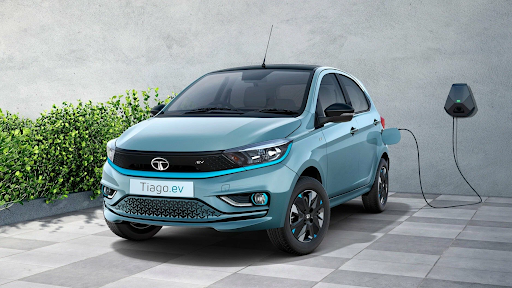
Tata electric cars in India now cover more than one budget and body style. Entry hatchbacks, compact electric SUVs and larger premium EVs sit at very different price points, battery sizes and space levels. Buyers should therefore compare daily range needs, home-charging access, rear-seat comfort and boot requirements before chasing the longest claimed range.
Electric model price bands
| Electric model | Approx. ex-showroom price range |
| Tiago EV | Rs. 6.99–10.09 lakh |
| Punch EV | Rs. 9.79–12.99 lakh |
| Nexon EV | Rs. 12.49–17.89 lakh |
| Curvv EV | Rs. 17.19–19.69 lakh |
| Sierra EV | Rs. 18.79–26.48 lakh |
| Harrier EV | Rs. 21.79–30.54 lakh |
Battery and positioning notes
| Model | Battery / range note |
| Punch EV | 30 kWh and 40 kWh options; newer 40 kWh version targets longer real-world use |
| Nexon EV | Starts around Rs. 12.49 lakh; multiple range/feature variants |
| Curvv EV | Coupe-SUV shape with a higher price band |
| Harrier EV | Larger electric SUV for buyers prioritising space and road presence |
Price bands now cover several buyer types
The Tiago EV remains the lower-cost entry point, Punch EV adds SUV-like packaging, Nexon EV moves into a more mature compact-SUV class, and Curvv, Sierra and Harrier EVs target progressively larger budgets. That spread means there is no single Tata cars answer for every family.
Public charging should be a backup plan for most home-charging owners, not the only plan. Check charger reliability on routes you actually use and how often those trips occur.
Range should match your routine, not your ambition
Most owners do not need the longest available battery every day. Track your normal weekly distance, longest frequent round trip and access to charging. A smaller battery can reduce purchase price if home charging is easy and daily use is modest. A larger pack adds useful flexibility for intercity travel.
Space can matter more than range
An EV with a long claimed range may still be wrong if rear-seat comfort, boot shape or ground clearance does not suit the family. The Punch EV offers a 366-litre boot and 195 mm unladen ground clearance in current specifications, while larger models provide more cabin footprint. Test luggage and passenger comfort before comparing software features.
Safety and battery confidence
Modern EV buying requires two safety conversations: crash protection and high-voltage-system confidence. Check the official crash rating where available, the battery warranty terms, thermal-management system and roadside support. Do not treat battery percentage or charging speed as the only technology metrics.
Charging changes the ownership experience
Home charging is the biggest convenience advantage for many EV owners. If you can park and charge overnight, everyday use can feel easier than visiting a fuel station. Apartment residents should confirm electrical load, parking permissions and charger installation before booking.
Who gets the best value
High urban running with reliable home charging can make an EV financially attractive over time. Low-mileage users may value refinement and zero tailpipe emissions more than fuel savings. Compare purchase price, electricity cost, insurance and expected resale instead of assuming every EV automatically saves money.
Home charging should be confirmed first
Before choosing between Tiago EV, Punch EV, Nexon EV or a larger electric model, establish whether you can install a charger where the car parks overnight. Ask the housing society or property manager about electrical load and cabling. A reliable home setup often matters more to satisfaction than a small difference in claimed range because it determines how easily the car begins each day with useful charge.
Battery size should follow your longest regular trip
Instead of buying the largest battery you can afford, identify the longest journey you make at least once or twice a month. Add a sensible buffer for traffic, weather and detours. If the smaller battery covers that route comfortably and charging exists at the destination, paying for extra capacity may not be necessary. Frequent intercity users can justify the larger pack more easily.
Price public charging into the plan
Home electricity can make daily running inexpensive, but repeated fast charging on highways costs more and takes planning. Estimate how many kilometres each year will rely on public chargers, then include those tariffs in the ownership calculation. This produces a more honest comparison with petrol or diesel than assuming every unit of electricity comes from the cheapest home rate.
Match the EV to your charging reality
A buyer with private parking and dependable home charging can comfortably consider a different battery size from someone who depends on public chargers. Map your weekly routine, longest recurring trip and nearby fast-charging options before choosing among Tata electric cars in India. Then add cabin space and boot needs. A smaller EV may be financially stronger for a two-person city household, while a larger family can justify paying more for rear-seat comfort and luggage room. This approach prevents range anxiety from pushing you into a battery or vehicle class that exceeds what your real journeys require.
Conclusion
Tata’s electric portfolio now covers several budgets, so the right EV is the one whose range, cabin and charging needs fit your life. Do not overbuy battery capacity or underbuy space. A home-charging plan and a realistic weekly-distance calculation should come before the final variant choice.