
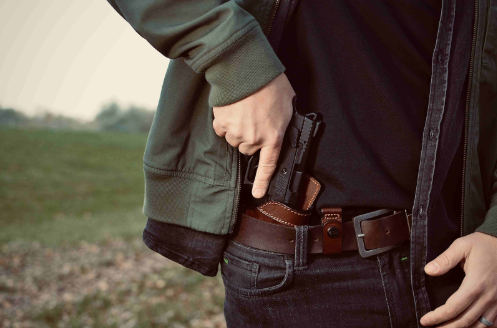
Carrying a firearm responsibly requires a balance between safety, accessibility, and comfort. For many gun owners, inside-the-waistband (IWB) holsters remain the preferred choice because they allow for discreet carry without sacrificing control. Over the years, designers have introduced a variety of innovations to improve these holsters, making them more comfortable for long wear and more reliable for quick access. Modern IWB holsters are a testament to how engineering advances can transform everyday carry into a safer, more practical experience.
The Need For Comfort In Everyday Carry
One of the biggest challenges gun owners face is finding a holster that is comfortable for extended wear. Traditional designs often caused pressure points, skin irritation, or limited mobility. Today’s IWB holsters use ergonomic designs and advanced materials to solve these issues.
- Contoured shapes distribute pressure more evenly against the body.
- Moisture-wicking backers keep the holster cool, even in warm climates.
- Adjustable cant and ride height allow users to position the holster in the most natural way for their body type.
These engineering improvements reduce fatigue and discomfort, making all-day concealed carry far more realistic for professionals and everyday users alike.
Materials That Make A Difference
Modern holsters are no longer limited to basic leather or nylon. Engineers and manufacturers now incorporate materials like Kydex, polymer blends, and hybrid fabrics to create more effective IWB holsters.
- Kydex shells provide rigidity, ensuring the firearm stays secure while allowing for smooth draws.
- Hybrid models combine a rigid outer shell with a padded backing for comfort.
- Polymer composites offer lightweight strength, balancing durability with ease of carry.
The choice of materials ensures holsters can withstand daily use while remaining comfortable enough to wear for long hours without adjustment.
Enhanced Retention And Safety
Safety is always the top priority in holster design. Earlier models sometimes compromised on retention, but modern engineering has produced IWB holsters with adjustable retention systems. These allow the user to fine-tune the draw resistance to their preference.
Click-in retention mechanisms and audible lock indicators reassure carriers that their firearm is secure. Combined with reinforced trigger guards, these designs significantly reduce accidental discharges while maintaining fast accessibility.
Concealment Improvements
Concealed carry requires more than just hiding the outline of the firearm—it requires seamless integration into daily clothing. Advances in IWB holsters now address printing (the visible outline of a firearm through clothing). Many holsters are designed with claw attachments or wedge systems that angle the grip closer to the body, reducing visibility under shirts or jackets.
The ability to conceal comfortably without constant wardrobe adjustments has made modern holsters much more appealing for those who carry daily in professional or casual environments.
Adjustability For Personal Fit
Not every carrier has the same needs, and engineers have recognized this by introducing customizable adjustments in IWB holsters. Features like adjustable ride height, cant, and even swap-out clips allow the same holster to adapt for different preferences or activities.
For example, a user may prefer a deeper concealment setting for daily wear but a higher ride position when driving for easier access. These built-in adjustments mean one holster can serve multiple purposes, adding value and flexibility to the investment.
The Role Of Technology In Design
Computer-aided design (CAD) and 3D printing have transformed how holsters are developed. Today’s IWB holsters benefit from precise modeling that ensures consistent production and tighter tolerances. Prototypes can be tested and refined more quickly, leading to better ergonomics and functionality.
These tools also allow designers to account for subtle variations in firearm models, ensuring compatibility without the bulk of “one-size-fits-all” designs. The result is a product that feels tailor-made for both the firearm and the wearer.
Conclusion
The evolution of IWB holsters reflects a broader trend in personal defense—engineering innovation focused on safety, comfort, and adaptability. With advances in materials, ergonomics, concealment design, and retention systems, today’s holsters make it easier than ever for firearm owners to carry discreetly and responsibly.
For those exploring different carry options, it’s worth noting that outside-the-waistband holsters continue to have their place as well. An OWB holster offers advantages in open carry and range settings, providing versatility alongside IWB solutions. Together, these innovations ensure that carriers can select the holster that best balances comfort, concealment, and quick access for their daily needs.