
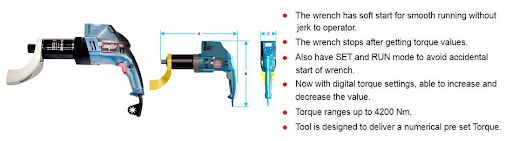
When it comes to industrial bolting, precision, consistency, and control are non-negotiable. Even a minor tweak in torque can throw off joint integrity, hurt equipment performance, or create serious safety hazards on the job. That’s why more and more operations are moving away from purely manual methods and shifting toward powered tools. Using an electric-powered torque wrench gives technicians precise, repeatable control over every bolt, making heavy-duty fastening far more accurate and reliable.
Consistent Torque Application
The most important benefit offered by an electric-powered torque wrench is the reliability that comes from it. Manual fastening will always have the human factor involved; it will be different according to the physical strength, angle, or exhaustion of a technician at the end of the working day. An electric tool will eliminate the element of unpredictability by providing a reliable output that will always ensure that a particular fastener will be tightened with an exact amount of torque.
This consistency is especially critical in cases where several bolts have to be tightened to the same standard. Torque consistency ensures proper load distribution in a joint and minimizes the chances of either loose or overly tightened bolts.
Better Control During Critical Applications
Industrial machinery will have huge fasteners that need huge torque to be put in place. Electric torque wrenches allow precise use; hence, they make the job of tightening very tight bolts much easier for the technician. The powered mechanism of the tool will save the user some energy during maintenance.
In cases where very complicated fasteners have to be used, an electric-powered torque wrench can be used alongside other machinery such as hydraulic bolt tensioners and flange alignment tools.
Faster Industrial Bolting
When a plant is down for maintenance or a new line is being installed, every minute counts. Manual tightening takes forever, but electric tools zip through repetitive bolting tasks in a fraction of the time without sacrificing accuracy. Crews get way more done during tight shift windows.
For setups that demand precise bolt stretch rather than just rotational force, using a multi-stage bolt tensioner lets you pull the bolts tight in smooth, sequential passes. It’s one of the cleanest ways to get your exact target preload while keeping joint performance rock-solid.
Reduced Operator Fatigue
Hauling around heavy hand tools and cranking on giant bolts all day takes a massive physical toll on a maintenance crew. Electric equipment does the heavy lifting for them, which keeps technicians from burning out halfway through a long shift.
The same goes for a multi-stage bolt tensioner; it takes the raw physical strain out of critical tensioning jobs, letting the hydraulics handle the high loads so the operator can focus on monitoring the readouts and keeping things safe.
Let’s Sum Up!
At the end of the day, electric bolting tools give you a better combination of speed, accuracy, and physical relief for your team. By cutting human error out of the equation, you get safer joints and way smoother maintenance turnarounds.
If you’re looking to upgrade your job site gear, Bolting Systems carries a full range of Hydraulic Torque Wrenches, Battery Torque Wrenches, Pneumatic Torque Wrenches, Hydraulic Bolt Tensioners, Torque Multipliers, and Flange Alignment Tools designed to handle whatever tough jobs you throw at them.