
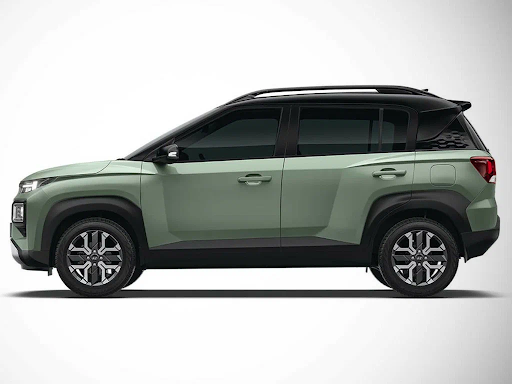
The Hyundai Exter offers a strong list of standard safety equipment, including six airbags, but it does not currently have a published official NCAP crash-test rating. Families should separate equipment availability from independently measured crash protection when judging the vehicle.
What is the Hyundai Exter safety rating?
As of August 2026, the hyundai exter safety rating has not published an official Bharat NCAP or Global NCAP result. This means buyers should not assign it an assumed star rating based on features, body style or another Hyundai model. A formal rating becomes available only after the relevant test agency releases results for the tested specification.
| Safety measure | Current position |
| Official Bharat NCAP rating | Not available |
| Official Global NCAP rating | Not available for the current model |
| Airbags | Six airbags as standard |
| Rear parking support | Sensors; camera on selected variants |
| Electronic stability systems | Available depending on variant |
Standard safety equipment still matters
Six airbags across the range provide protection coverage for front and side impacts, while ABS with EBD helps maintain steering control during hard braking. Seat-belt reminders, rear parking sensors and impact-sensing door functions also support everyday safety.
- Six airbags as standard
- ABS with EBD
- Rear parking sensors
- Three-point seat belts for seating positions as specified
- ISOFIX child-seat anchors on applicable rear seats
- Electronic stability control and hill-start assist on selected variants
Why a star rating and a feature list are different
A crash-test rating measures how the structure and restraint systems protect occupants under defined impact conditions. A long feature list cannot reveal passenger-compartment stability, injury measurements or child-seat performance. Conversely, a good crash rating does not remove the need for safe driving, correct child restraints and properly worn seat belts.
Families should therefore use both forms of information. The standard equipment shows what systems are present, while an NCAP result, when available, provides independent evidence of performance in specific crash tests.
What parents should check during a test drive
| Check | Why it matters |
| ISOFIX access | Anchors should be easy to locate and use |
| Rear head restraints | Should align with passenger height |
| Seat-belt fit | Belt should sit correctly across shoulder and lap |
| Child-lock operation | Important for young passengers |
| Rear visibility | Supports safer reversing in crowded areas |
Parents should bring the child seat they intend to use and install it before buying. Check whether the front passenger seat remains comfortable after a rear-facing seat is fitted. Also test how easily children and older relatives can enter the rear cabin.
How the Exter compares with rated alternatives
The absence of an official rating does not prove that the Exter is unsafe, but it does create uncertainty. Buyers who place an independently published crash score above all other factors may prefer to compare it with vehicles that have a current Bharat NCAP or Global NCAP result. The comparison should use the same market specification and similar safety equipment.
Hyundai has demonstrated five-star Bharat NCAP performance with the newer Venue, but that result cannot be transferred to the Exter. Each model has its own platform, structure, weight and restraint calibration.
Practical family-safety habits
- Use age-appropriate child restraints on every journey.
- Never rely on an airbag instead of a seat belt.
- Keep loose objects out of the cabin during travel.
- Replace damaged tyres and maintain correct pressure.
- Avoid adding accessories that interfere with airbags or visibility.
Verdict
The Hyundai Exter has a reassuring standard safety-feature list, especially six airbags, but its official NCAP rating remains unavailable. For a family buyer, that makes the decision less straightforward. Evaluate the equipment of the exact variant, child-seat compatibility, braking behaviour and visibility, while recognising that independently verified crash performance is still an open question.
Safety equipment should match the exact variant
Brochures often combine features from several trims, so buyers should verify the exact equipment fitted to the chosen version. Electronic stability control, hill-start assist, a rear camera and tyre-pressure monitoring may not be identical across the range. Ask the salesperson to demonstrate each function in the actual car rather than relying only on a comparison sheet.
Maintenance is part of safety
Safety systems depend on tyres, brakes, lights, sensors and restraint components remaining in good condition. Worn tyres can lengthen stopping distance even when ABS is working correctly. Windscreen damage near a camera or sensor can also affect driver-assistance functions. Follow the service schedule, replace crash-damaged seat belts and never ignore an airbag or ABS warning lamp.
Until an official test result is published, the safest approach is transparency. Treat the rating as unavailable, not poor or excellent. That keeps the buying decision evidence-based and prevents marketing claims from replacing independent crash data.
Before making the final choice, verify the latest price, specification and availability with an authorised dealer. Product details can change by model year, city and variant, and a careful test drive remains the most reliable way to judge comfort, visibility, performance and everyday usability.
Using safety technology responsibly
Driver-assistance features can support attention, but they do not make the vehicle autonomous. Cameras and sensors may be affected by rain, dirt, glare or unclear road markings. The driver must remain responsible for speed, steering and braking at all times. Families should learn how warnings and interventions behave before depending on them in difficult traffic.
The value of a transparent purchase decision
A responsible buying decision accepts what is known and what is not. The Exter’s standard safety equipment is documented, while a formal crash rating is not. That distinction allows families to compare it fairly with rated alternatives without exaggerating either its strengths or its uncertainty.