
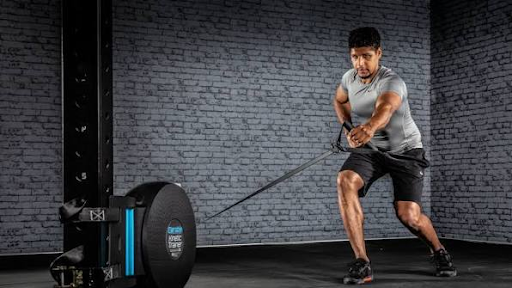
New Zealand’s fitness industry is undergoing a clear transformation. Gym owners and performance facilities are increasingly moving away from traditional ways of doing things and shifting towards more performance-based training solutions.
The need for better gym equipment is one thing; however, what is currently required is a training environment that will meet the needs of the modern fitness users. The new training spaces need to be efficient, flexible, and performance oriented.
One trend which has been observed in New Zealand is that flywheel training equipment seems to be gaining significant popularity throughout the country. What used to be reserved for sports performance centres can now be seen in commercial gyms and boutique training studios across New Zealand.
For businesses involved in supplying or selecting gym equipment NZ, understanding the impact of flywheel systems in today’s training environment is becoming increasingly important.
What Makes Flywheel Training Equipment Different
Unlike conventional commercial fitness equipment that relies on weight stacks or plate loaded resistance, flywheel training equipment uses rotational inertia.
Resistance is generated based on the effort applied by the user, allowing it to adjust dynamically instead of remaining fixed.
This creates a unique training dynamic:
- Resistance increases as effort increases
- Both concentric and eccentric phases are actively engaged
- Continuous tension is maintained throughout the movement
The most notable advantage is the ability to create eccentric overload, something that is difficult to achieve with traditional machines.
For facilities focused on performance outcomes, this capability alone makes flywheel training equipment worth considering.
Why New Zealand Gyms are Adopting Flywheel Systems
1. Shift Toward Performance-Based Training
Across New Zealand, there is a noticeable shift in how people approach fitness. Members are no longer only interested in general workouts. They are increasingly seeking structured training programmes that improve:
- Strength and power
- Athletic performance
- Movement efficiency
- Injury resilience
This makes sense in a nation where the sport is a cultural aspect of life, and where many members of the gym are involved in activities because of their desire to enhance performance.
With flywheel training equipment, the user can achieve these demands by providing explosive force and deceleration training that is required in practical sports applications.
As a result, investments in commercial fitness equipment are increasingly guided by the ability to deliver effective and measurable results.
2. Effective Utilisation of Space
The utilisation of space has been critical in determining how modern gyms operate in New Zealand.
Flywheel systems provide a practical solution by offering:
- Compact footprints
- Multiple exercise variations within one unit
- Reduced need for large volumes of equipment
This allows gym managers to maintain clean, organised training floors without compromising training intensity.
For boutique studios and performance centres, this leads to better member flow and higher space utilisation per square metre.
3. Versatility across Various Users
One reason why flywheel training has gained popularity is the flexibility of its use by various individuals.
This system can be used in:
- Athlete training programmes
- Rehabilitation and physiotherapy settings
- Strength and conditioning programmes
- General fitness training with coaching support
This wide application makes flywheel systems a valuable addition for facilities serving both general members and performance-focused clients.
It should be noted, however, that coaching plays a crucial role in maximising the benefits of these training systems.
4. Growing Importance of Eccentric Training
Eccentric strength is now recognised as a key component of effective training. It plays a critical role in:
- Reducing injury risk
- Improving muscle development
- Enhancing control and stability during movement
Traditional equipment often limits how effectively eccentric loading can be applied, especially in controlled and repeatable ways across different users.
Flywheel training equipment addresses this limitation by allowing users to generate and resist force dynamically throughout every repetition.
For gym owners in New Zealand aiming to differentiate their training offering, this becomes a clear competitive advantage.
5. Alignment with High-Performance Training Environments
Performance centres and elite training facilities in New Zealand have been early adopters of flywheel systems.
Brands such as Desmotec have set a benchmark in this space by providing equipment designed for precision, control, and measurable performance output. These systems are widely used in:
- Professional sports environments
- Rehabilitation programmes
- Elite strength and conditioning facilities
The adoption of features from performance training by commercial gyms increases the use of these systems in general.
Flywheel Systems in a Commercial Gym
These are not meant to take the place of all existing weight training equipment in your facility. Rather, they serve as a complement to increase performance capacity.
They should be strategically placed in the following areas in an effectively designed gym environment:
• Performance area
• Function training space
• Rehab and recovery areas
They help users utilise them through a training program rather than using them on their own.
Important Points before making this Investment in a Flywheel System
1. Coaching and User Education
Flywheel systems deliver optimal results when users clearly understand:
- How to apply force correctly
- How to control deceleration and movement patterns
Facilities without coaching support risk underutilising the equipment, which can reduce return on investment.
2. Audience Fit
If your gym primarily serves general users with minimal guidance, adoption may be slower.
However, facilities that cater to:
- Athletes
- Personal training clients
- Performance-focused members
are more likely to see higher engagement and value from flywheel systems.
3. Integration with Existing Equipment
Flywheel systems should complement your current setup rather than replace it.
They work best when integrated alongside:
- Plate-loaded strength machines
- Free weight areas
- Functional training spaces
This creates a balanced training environment that supports both foundational strength and advanced performance work.
Common Mistakes to Avoid
Introducing flywheel equipment without a clear strategy can limit its impact. Gym owners should avoid:
- Treating it as a trend rather than a training tool
- Failing to train staff on proper usage and programming
- Placing it in low-visibility areas where usage remains minimal
- Expecting immediate adoption without member education
The success of flywheel systems depends not only on the equipment itself but on how effectively it is integrated into the training environment.
The Future of Gym Equipment in New Zealand
The New Zealand fitness industry is gradually shifting toward smarter, more performance-driven facilities.
Modern gym members expect:
- Efficient workouts
- Measurable progress
- Equipment that supports advanced training methods
Flywheel training equipment aligns strongly with these expectations.
For businesses evaluating gym equipment NZ, investing in systems that support long-term training outcomes helps position facilities as progressive and future-ready.
Conclusion
Nowadays, flywheel training equipment is no longer reserved solely for professional settings. It has become a strategic addition in modern gym facilities across New Zealand due to its ability to enable performance-based training, optimise space usage, and deliver measurable results.
In the selection process of commercial fitness equipment, key factors to consider include target customer base, training approach, and availability of coaching expertise.
When implemented correctly, flywheel systems can improve training efficiency, enhance member results, and strengthen facility positioning and reputation.
As the industry continues to move toward performance-focused training environments, the right equipment does more than support workouts.
It helps define what a gym can truly achieve.